
Warehouse Management and Live Fleet Tracking: One Operational Loop
Warehouse accuracy and live fleet visibility only create value when they share one status from pick to proof of delivery. Here is how to connect the loop.
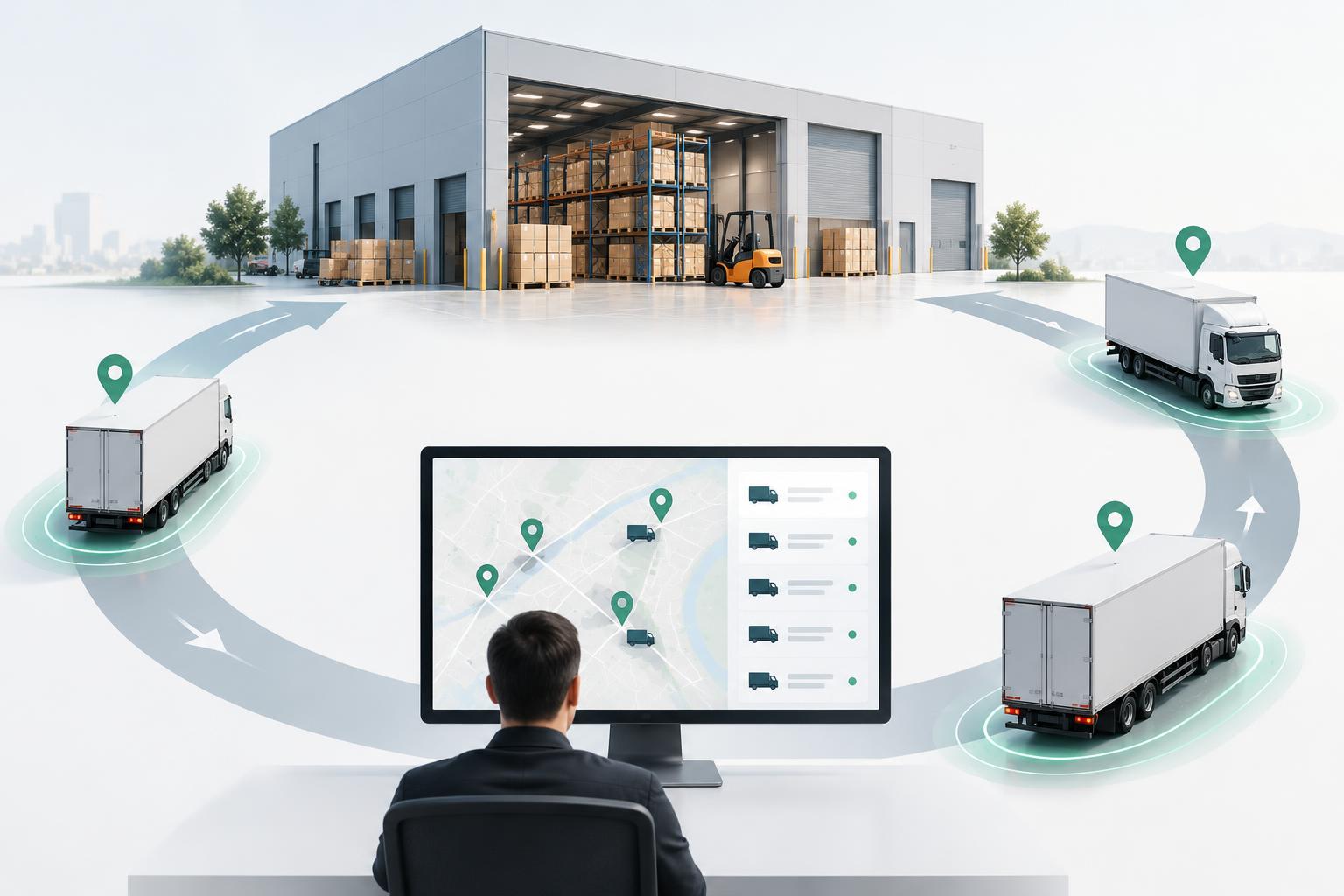
Warehouse work and delivery work usually sit in separate systems. The warehouse knows what is packed. The fleet knows where the vehicle is. The customer knows neither. Teams bridge the gap with phone calls, spreadsheets, and paper proof of delivery. That is where delays, disputes, and billing errors begin. The fix is not another dashboard. It is one operational loop that starts with an order and ends with signed delivery.
Why warehouse and fleet data drift apart
Warehouse management covers receiving, storage, picking, packing, staging, and dispatch. Live fleet tracking covers vehicle movement, route progress, arrival, and delivery evidence. Each is useful alone. Separated, they produce conflicting versions of the same order. Stock records say shipped while the vehicle is still at the loading bay. A driver marks delivered while the warehouse has no signed proof. Finance invoices against a record no one can close.
Every handoff adds a manual check. More SKUs, more routes, and more drivers widen the gap. The cost is not only administration. It is missed delivery windows, failed first attempts, unexplained stock differences, and revenue that leaks through credit notes and disputes.
Live tracking must answer operational questions
A moving dot on a map is not enough. Live fleet tracking earns its place when it answers four questions: which orders are on the vehicle, which stops are complete, what changed on the route, and what proof exists at handover. A location without an order reference tells operations very little.
Strong tracking also survives normal field conditions. Drivers need a simple mobile workflow. Status changes should be timestamped. A failed delivery should capture a reason and trigger a next action. Proof of delivery, whether a signature, a recipient record, or another verifiable handover, is what turns a location into a completed transaction.
Warehouse discipline protects the last mile
Delivery accuracy begins before the vehicle leaves. If a pick confirms an item that is not on the shelf, dispatch is already late. Good warehouse management records stock by location, reserves inventory for an order, verifies the packed load, stages goods by route, and records the dispatch handover.
Returns need the same discipline in reverse. The warehouse should know what left, with whom, when, and what came back. That record supports customer service, stock correction, and billing. Without it, fleet tracking only follows a vehicle carrying an unverified load.
Five handoffs that connect the loop
- Order release. The warehouse receives an approved order with its delivery priority and window. The fleet team sees the same order, not a retyped version.
- Load verification. Packed items are matched to a manifest before the doors close. Discrepancies are resolved at the bay, not at the customer's gate.
- Dispatch. Driver, vehicle, load, and departure time are recorded against the same order record.
- Delivery. The driver updates status, captures proof of handover, and logs exceptions with a reason.
- Reconciliation. Stock, customer status, and billing update from the delivery record. Finance does not rebuild the story from paper.
When any one handoff depends on re-entry, the loop breaks. The goal is one status that warehouse, dispatch, customer service, and finance can trust.
What to look for in a combined system
You do not need every module on day one. You do need a single source of truth. Look for warehouse and transport workflows that share order records, role-based views for the dock and the road, and a driver interface that works on the devices your team already carries.
Check how exceptions are handled. Late vehicles, short picks, refused deliveries, and returns should create visible next steps, not a note in a chat group. Confirm that billing can be tied to delivery evidence, and that audit history shows who changed what and when. If your operation serves property maintenance, procurement, or field sales, ask how the system connects to those workflows. Integration should reduce re-entry, not create another export.
Where FleetCheeta fits
Dal Dom builds FleetCheeta as a logistics and supply chain platform. It runs dispatch, live tracking, warehouse, and billing as one system, from dispatch to signed proof of delivery, on Dal Dom's own IP. In the Dal Dom portfolio, FleetCheeta moves Maktabi's maintenance and supply runs and fulfils ProcureIn's procured goods.
That matters for teams that already manage properties, procurement, or field operations. The same order can move through warehouse, dispatch, delivery, and billing without being recreated in four places. The practical case is fewer calls to check status, cleaner proof at handover, and a shorter path from completed delivery to invoice.
A practical rollout sequence
Start with one warehouse and one route group. Define a small set of statuses that everyone understands: released, picked, loaded, dispatched, delivered, exception. Clean item and location data before go-live, because tracking cannot fix a catalogue that disagrees with the shelves.
Train the handover, not just the screens. The dock team needs a consistent load check. Drivers need a clear rule for proof and exceptions. Customer service needs one view of the order. Run the new loop alongside existing reports for a short period, review exceptions daily, then retire the duplicate spreadsheets.
Connect billing only after proof of delivery is reliable. Automating a disputed record simply produces disputed invoices faster.
Measure the loop, not the tools
Track a small set of measures: on-time dispatch, first-attempt delivery, inventory accuracy, proof-of-delivery completeness, exception resolution time, and invoice dispute rate. Review them together. A strong dispatch number with weak proof completeness creates billing risk. High inventory accuracy with late dispatch still misses the customer promise.
The point is not to collect more data. It is to find the handoff that keeps failing and fix the process behind it.
Build one chain of custody
Warehouse management and live fleet tracking work best when they describe the same order at every stage. One record, one status, one proof of delivery. That is a simpler operating model than stitching together a warehouse tool, a tracking screen, and a separate billing process.
If you want dispatch, live tracking, warehouse, and billing in one system, talk to Dal Dom about FleetCheeta. Bring your current handoffs and we will show you where the loop can be tightened.