
Procurement Bidding Marketplaces With Milestone Escrow: A Practical Guide
A bidding marketplace finds the supplier. Milestone escrow ties payment to accepted work. Here is how to design the process so procurement stays controlled, evidence-based and easier to audit.
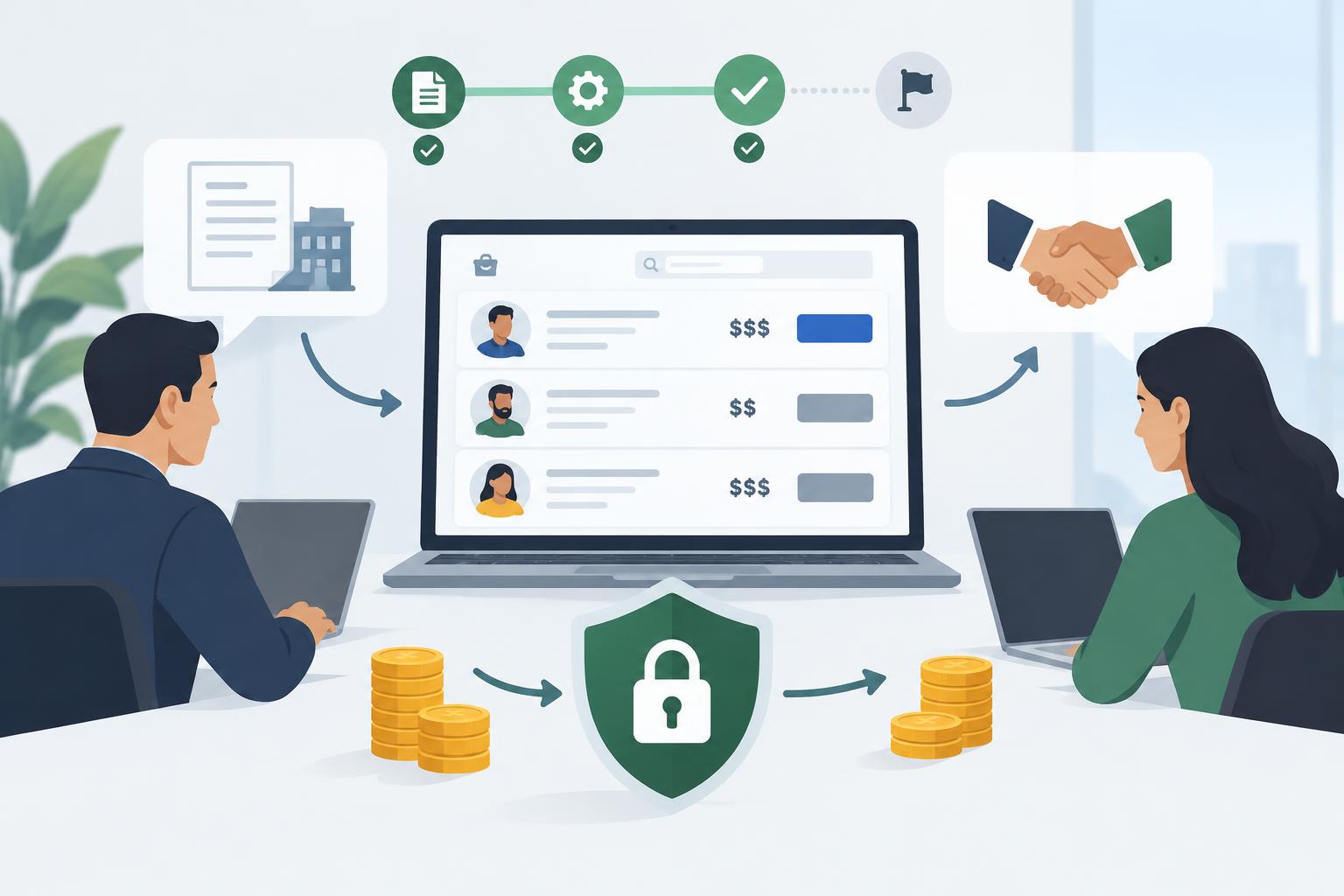
Procurement Bidding Marketplaces With Milestone Escrow
Procurement breaks in predictable ways. A scope is vague. Bids arrive in different formats. A supplier starts work before the money is secured. An invoice lands before anyone has checked the job. A bidding marketplace fixes the first two problems. Milestone escrow fixes the last two. Together they turn buying into a controlled process: define the need, compare offers, fund the work, and release money against accepted outcomes.
Why property teams should care
Property operations run on many small and medium purchases: repairs, turnarounds, compliance work, recurring maintenance and capital projects. These are easy to buy badly. A leaking roof does not wait for a three-week tender. A boiler replacement can become an open-ended invoice. A cleaning contract can roll over for years without a price check.
Competitive bidding creates a record. Suppliers see the same requirement. Buyers see comparable offers. Milestone escrow protects the cash. Instead of paying everything upfront, the buyer funds the job and releases money as defined parts are accepted. The supplier gets a clear path to payment. The buyer gets a clear path to recourse.
This is not only enterprise procurement. It is a practical control for any team that regularly buys work from external suppliers.
The five parts of a workable marketplace
A bidding marketplace is not an online noticeboard. The useful version has five parts:
- A structured request. Scope, location, timeline, acceptance criteria, required documents and commercial terms are defined before suppliers bid.
- A comparable bid format. Suppliers price the same line items and state exclusions, assumptions, validity and proposed schedule.
- A milestone plan. Payment is split across verifiable stages, not one lump sum.
- An escrow rulebook. The marketplace states how funds are held, who can release them, what evidence is required and what happens in a dispute.
- An audit trail. Requests, questions, bids, clarifications, approvals, evidence and releases stay linked to the job.
Leave any one out and the process leaks. A strong bid format without escrow is still an exposure. Escrow without acceptance criteria becomes a fight over what “done” means.
Design milestones around evidence
Milestones should match outcomes you can check. A maintenance job might use mobilization, work complete, and inspection and handover. A larger project might add design approval, procurement of long-lead items, installation, testing and closeout.
Keep the number of milestones proportional to the risk. Too few and the buyer carries too much exposure. Too many and administration costs overwhelm the job.
Define acceptance evidence before the bid goes out. Photos, test results, signed handover sheets, permits, warranties, waste-transfer notes and closeout packs are all valid if they fit the work. Make the requirement specific. “Satisfactory completion” is not evidence. “Signed inspection checklist plus before-and-after photos at each listed location” is.
Do not release a milestone against a verbal update. Do not let a supplier self-certify a safety-critical step without independent review. Do not let the final milestone become the only real checkpoint.
Compare bids on more than price
The lowest bid is a starting point, not a decision. Normalize offers before comparing them. Check whether each supplier priced the same scope, included the same materials, allowed for the same access restrictions and proposed a realistic schedule.
Use a simple weighted score: price, scope fit, delivery speed, availability, compliance record, warranty and quality evidence. Ask suppliers to declare exclusions and assumptions. A cheap bid that excludes disposal, permits or after-hours access is not cheap.
Keep clarifications inside the marketplace. Side conversations create invisible terms. If a supplier needs to change scope, record a revised bid or a formal change order. The same discipline applies after award.
Treat escrow as a process, not a payment button
Escrow only works when the rules are explicit. Confirm how the job is funded, which milestones are covered, who approves release, how long approval takes and how a rejected milestone is corrected. Define what happens if a buyer does not respond, if a supplier demobilizes, or if only part of a milestone is accepted.
Set a dispute path with timestamps. A good path is: supplier submits evidence, buyer reviews within a stated window, rejection includes reasons, supplier corrects and resubmits, unresolved matters move to a named reviewer. Keep the money and the evidence linked at every step.
Change orders deserve the same treatment as the original award. New scope, new price, new milestone, new approval. Do not let urgent verbal extras bypass the escrow record.
Where ProcureIn fits
Dal Dom’s Concept page describes ProcureIn as a competitive-bidding sourcing marketplace where buyers post needs, suppliers bid, and winning work clears through per-milestone escrow. The same page says ProcureIn serves Maktabi’s maintenance operations and Wudd’s benefit procurement, and that FleetCheeta fulfils ProcureIn’s procured goods.
That portfolio context matters for property teams. Maintenance procurement is rarely a standalone purchase. It starts with an asset issue, moves through approval and supplier selection, and ends with delivery or work completion. The more of that chain that stays in one record, the less time the team spends reconciling versions.
The practical test is simple. Take one recurring maintenance category. Map the request, the bid, the milestone plan, the acceptance evidence and the release rule. If any step still lives in a separate spreadsheet or chat thread, fix that before scaling.
A short rollout checklist
Start with one category and one approved supplier pool. Build a request template with clear acceptance criteria. Set a milestone policy by job value and risk. Agree who can approve each release. Define dispute timelines. Require evidence at every payment. Review cycle time, price spread and rework after the first quarter.
A bidding marketplace with milestone escrow does not remove judgment. It makes judgment visible. That is the point. You can see what was bought, what was promised, what was proven and what was paid. For a property operation, that is a better way to buy.
If you want to apply this model to maintenance or project procurement, talk to Dal Dom about ProcureIn.