
WhatsApp Leasing Automation for Property Managers: A Practical Playbook
A practical guide to automating WhatsApp leasing without losing the human judgment that closes deals: qualification, viewings, handoffs, compliance and renewals.
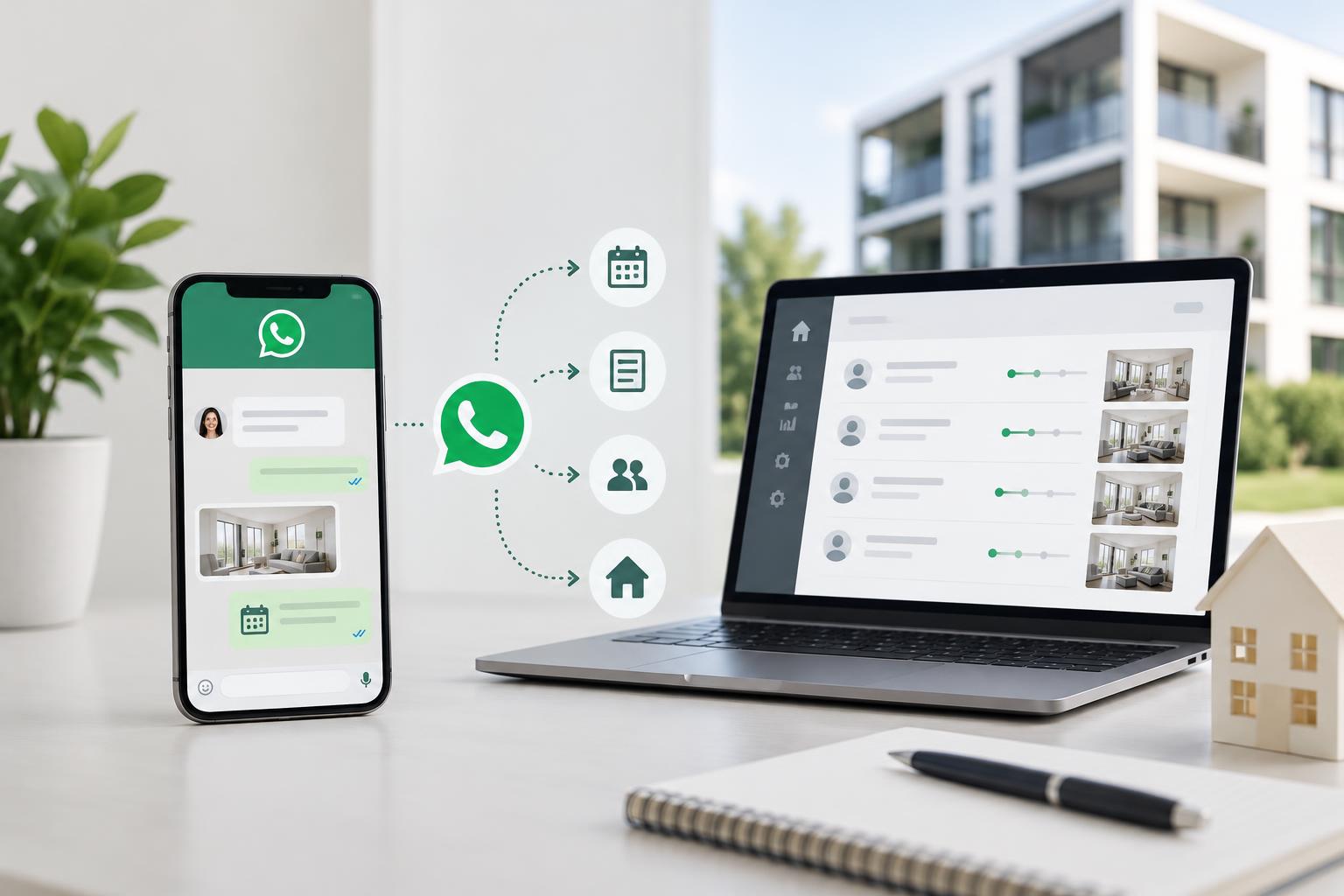
Turn WhatsApp into a leasing pipeline
Leasing teams rarely suffer from too few messages. They suffer from messages that go nowhere. A prospect asks about a unit after hours. An agent replies the next afternoon. The prospect has already viewed somewhere else. Multiply that by every listing, shift and handoff, and WhatsApp becomes a leaky front door.
Automation earns its place when it closes those leaks. The goal is not a bot that answers every message with a brochure. It is a controlled workflow that captures the enquiry, qualifies the prospect, books the viewing, sends reminders, collects documents, routes exceptions to a person and records what happened.
That is the standard to aim for. The tool comes second.
Map the leasing funnel first
Before you automate a single message, write down the stages from first enquiry to signed lease and renewal. Give each stage an owner, a next action and a failure condition. A simple sequence is enough:
- Enquiry: property, budget, move-in window, occupants and contact details.
- Qualification: intent, urgency, fit and decision role.
- Viewing: offer slots, confirm, remind and recover no-shows.
- Application: send the checklist, collect documents and track missing items.
- Handoff: route negotiation, complaints and exceptions to an agent.
- Follow-up: keep future move-ins and undecided prospects warm.
- Tenancy: handle renewals, rent reminders and maintenance requests.
- Record: log consent, conversation history and decisions.
Most automation projects fail because they start with the bot. Start with the funnel instead. Then decide which steps are deterministic, which need judgment and which should never be automated.
Qualify in layers, not with an interrogation
A leasing conversation needs enough information to match a prospect to a property, but nobody wants to answer twelve questions before they know whether the unit is still available. Ask three to five high-value questions first: budget, move-in date, property type, preferred location and number of occupants. Confirm what you infer. Leave employment, guarantors and documents for the application stage.
Language matters. A prospect may switch between Arabic and English, send a voice note from the car, or attach a photo of a document. Maktabi's outreach engine detects Arabic, English, Urdu and Tagalog, profiles persona, sentiment and emotional state, and adapts its responses. It transcribes voice messages and analyses images such as documents and property photos. That reduces friction without turning the conversation into a form.
Dal Dom's stated design approach is to build AI around the objection patterns, pricing structures, trust dynamics and decision timelines of each market, rather than generic English-language assumptions. That is the right test for any leasing automation: does it understand how your prospects actually talk, or does it only understand the demo script?
Make the viewing the conversion point
The viewing is where interest becomes intent. Automate the coordination around it: offer real slots, confirm the booking, send a reminder the day before and another on the day, and make rescheduling easy. Assign the agent, include the property address and access details, and send a short follow-up after the viewing.
Keep one calendar as the source of truth. Double bookings and vague arrival windows erode trust faster than a slow reply. If a prospect goes quiet, one polite follow-up is useful. Five is harassment. The same channel that books the viewing should confirm it, remind the prospect and capture the outcome.
Put human handoff rules in writing
The bot should know what it does not know. Define handoff triggers before launch: a request for a person, price negotiation, a complaint, a legal or contract question, a maintenance emergency, repeated misunderstanding or a prospect who is clearly frustrated.
When the handoff happens, send the agent the context: who the prospect is, what they want, which property, what was promised and what needs to happen next. The agent should not restart the conversation from zero.
Maktabi's outreach engine runs conversations through a 12-state model and logs every transition with a timestamp, reason and prior state. That kind of record is useful when a manager asks why a lead was marked cold or a handoff was triggered. Automation should make decisions easier to review, not harder.
Keep compliance boring and visible
WhatsApp is a business channel, not a personal inbox. Use approved message templates for outbound contact, capture opt-in, honour opt-outs and limit who can see tenant and prospect data. Set a retention rule and apply it. Rental rules vary by market; take local advice rather than assuming a template is compliant everywhere.
Money workflows need the same discipline. Maktabi includes digital payments via Tap, AI payment-proof verification, automated WhatsApp rent reminders, receipt generation and compliant e-invoicing. Dal Dom builds products that handle money with ZATCA-compliant e-invoicing and append-only audit ledgers. Those details matter because leasing does not end at signature. It continues through deposits, rent cycles and renewals.
Measure what moves a lease
Message volume is a vanity metric. Track first-response time, qualification completion, viewing show rate, application completion, time from enquiry to viewing, handoff rate, opt-out rate and renewal conversations opened. Review transcripts, not just dashboards. A high reply rate with poor qualification is noise.
Roll out in stages
Pick one property portfolio or lead source. Write the scripts, define the states and set the handoff rules. Run the flow with an agent reviewing outbound messages. Read the transcripts every week. Fix the questions that confuse people and the answers that create dead ends. Expand only when the funnel is clean.
Where Maktabi fits
Maktabi is Dal Dom's property management OS for landlords, agencies and asset managers. It covers tenant onboarding, rent cycles, payments, receipts, e-invoicing, maintenance dispatch and WhatsApp-native communication, with native iOS and Android apps for the back office. Its WhatsApp-native Outreach AI qualifies leads, handles objections, runs revenue recovery, predicts churn and works renewals over WhatsApp.
That combination matters. A standalone chatbot can start a conversation, but it cannot see the tenancy, the payment status or the renewal date. A property management system can hold the whole relationship.
Use automation for repeatable work. Keep people for judgment, negotiation and anything that carries real risk. If your leasing team already lives in WhatsApp, map one funnel and automate the handoffs first.
Talk to Dal Dom about putting Maktabi to work in your portfolio.