
Vendor Bidding Software for Property Maintenance: A Practical Guide
Maintenance budgets leak through informal quotes and undocumented awards. Here is what vendor bidding software should do, how to roll it out, and where it fits alongside a property management platform.
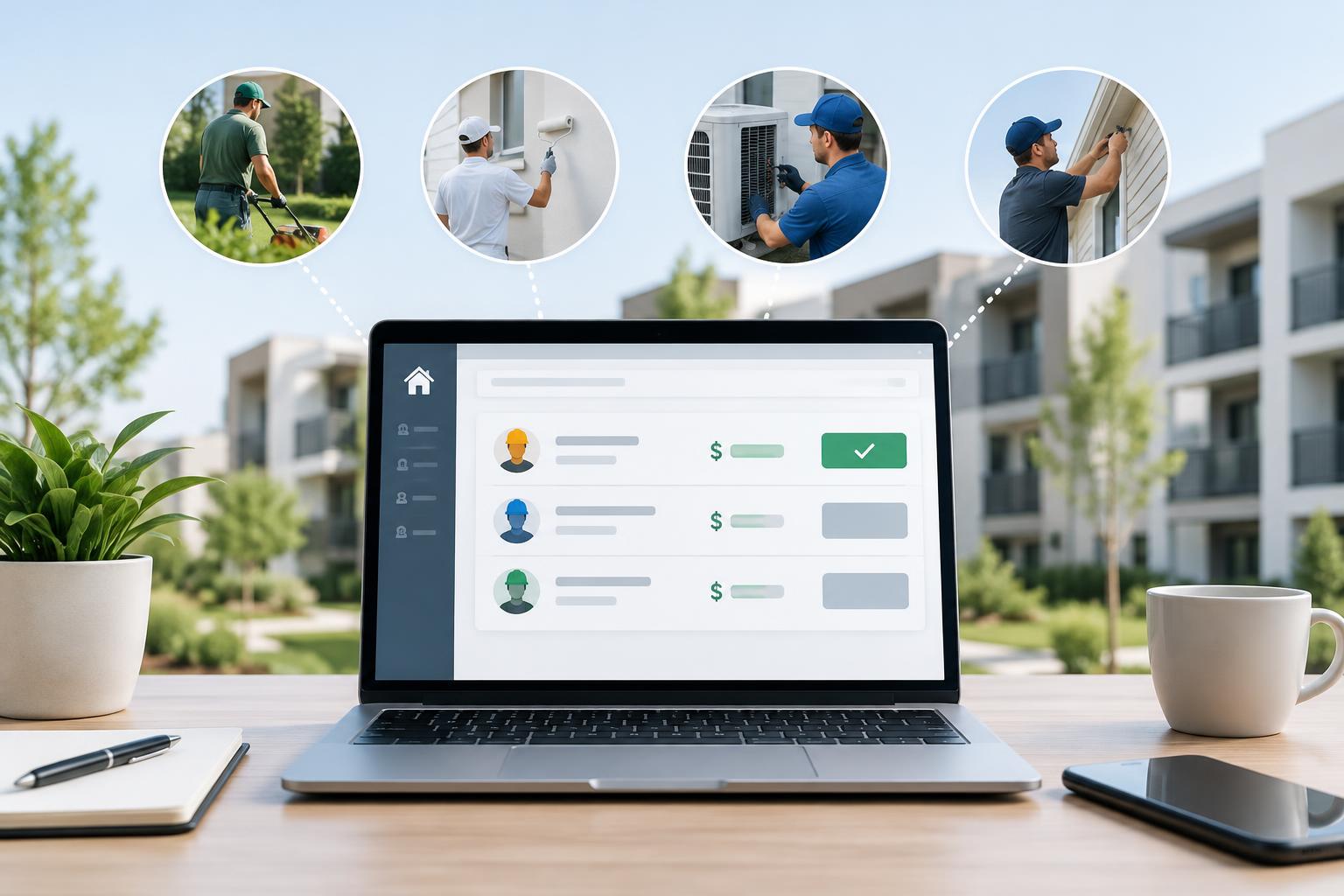
The leak is in the process, not the price
Maintenance is where property budgets quietly escape. A tenant reports a failed water pump. Someone asks three contractors for a price on WhatsApp. Two reply. One gets the job because he answered first. Six weeks later nobody can say what was agreed, what was paid, or why that vendor won.
Vendor bidding software fixes that specific failure. It turns a request, a set of comparable bids, an award decision, and a payment into one traceable chain.
This guide covers what the software should do, why property maintenance is a harder procurement problem than it looks, and how to roll it out without slowing your teams down.
Where manual maintenance bidding breaks down
- Scope lives in a phone call. The vendor who inspected the site knows more than the two who priced it blind. Bids are not comparable because the work is not defined.
- Formats vary. One quote is a PDF, one is a photo of handwriting, one is a message. Comparing them takes interpretation, not analysis.
- Awards are undocumented. Owners, boards, and auditors want to know why a vendor was chosen. "He was available" is not a record.
- Deposits are informal. Money moves before work is verified, and disputes have no paper trail.
- Every recurring job is re-quoted from zero. The same air-conditioning service is sourced five times a year with no history attached.
Core capabilities to expect
- Structured scope of work. Templates by trade and property type, with line items, quantities, and attachments. Every invited vendor prices the same thing.
- Controlled vendor invitations. An approved vendor list segmented by trade, coverage area, and compliance documents, with onboarding that does not require a training session.
- Consistent bidding. Sealed bids that open together, identical line-item structure, and a deadline that is enforced by the system rather than by reminders.
- Like-for-like comparison. Side-by-side pricing with the ability to normalise exclusions, warranties, and payment terms before you decide.
- Documented awards. Approval thresholds, a reason for the decision, and a record of who approved it.
- Conversion to work orders and purchase orders. The awarded bid becomes the executing document, not a separate email.
- Payment and escrow controls. Staged releases tied to completion evidence, and invoices that meet local tax requirements.
- Evidence and audit trail. Photos, completion sign-off, and an append-only history that survives staff turnover.
- Mobile access for the field. Site visits happen away from a desk. The tool has to work there.
Why property maintenance is harder than office procurement
Office procurement buys predictable things on a calendar. Property maintenance buys unpredictable things on a deadline.
Urgency competes with process. A burst pipe will not wait for a three-day bid window. Good systems handle this with a pre-approved emergency vendor panel and a higher approval threshold, not by abandoning the process.
Site access complicates everything. Vendors need to enter occupied units, coordinate with tenants, and work around building rules. The scope has to capture access constraints, or the bids are fiction.
Spend is split across two modes. Recurring work such as cleaning and landscaping belongs in term contracts. Reactive work such as repairs belongs in per-job bidding. A platform that only handles one mode will push half your spend back into WhatsApp.
Compliance is local. In Saudi Arabia, ZATCA-compliant e-invoicing is not optional for anything that touches money, and bilingual, region-aware billing matters. Retrofitting that later is expensive.
Where property operations and bidding meet
Dal Dom builds vertical software, and two parts of the portfolio touch this problem from different sides.
Maktabi is the property management platform for landlords, agencies, and asset managers. It covers the full lifecycle: tenant onboarding, rent cycles, digital payments, receipt generation, e-invoice compliance, maintenance dispatch, and WhatsApp-native communication, with a native iOS and Android app that puts the back office in your pocket.
ProcureIn, in the procurement vertical, is described in Dal Dom's portfolio as a bidding and escrow marketplace.
The practical logic: maintenance dispatch records the operational need. A bidding and escrow model applies a sourcing discipline to it. Dal Dom describes cross-product convergence as the direction of the portfolio — products serving each other through shared infrastructure and webhooks — while each product also stands on its own.
We build software that earns its place. That means products that run in production with real customers, not demos. Compliance-grade foundations come standard: append-only audit ledgers, region-aware billing, multi-currency, and bilingual support.
What to measure after rollout
Pick a small set of numbers and watch them for two quarters.
- Bids received per request, by trade.
- Cycle time from request to award.
- Awarded price versus budgeted price.
- Share of spend going to re-approved vendors versus new ones.
- Invoice exceptions and payment disputes.
- Repeat jobs still being sourced manually.
If bid counts do not rise while cycle time falls, the vendor list is too thin or the scope templates are too vague.
A rollout checklist
- Start with one trade. Pumps, HVAC, or plumbing. High frequency, clear scope, visible savings.
- Write the templates with your technicians. They know what the scope must include.
- Build the vendor panel before you launch. Ten approved vendors per trade beats a directory of a thousand.
- Set approval thresholds. Low-value jobs should move fast; high-value jobs need a second signature.
- Run both paths in parallel for a month. Compare the new trail against the old one.
- Review after each quarter. Remove vendors who never bid. Tighten scopes that produce wide price spreads.
Questions to ask any platform
- Does it enforce sealed bids and preserve a complete award history?
- Can it handle staged payments or escrow, and what evidence releases funds?
- Is e-invoicing compliant with the local tax authority, and is billing region-aware?
- Is there a native mobile app for site staff and vendors?
- Can vendors onboard and bid without a login nightmare?
- Who owns the data, and can you export it?
The bottom line
Property maintenance spend does not need more vendors. It needs a better request, comparable bids, and a decision you can defend a year later. Bidding software delivers that when the scope is structured, the vendor panel is controlled, and the award connects to the work order and the payment.
We build software that solves real problems, and we run what we ship. If your maintenance spend is still moving through chat threads and paper quotes, let's talk.