
Home-Cooked Food Ordering and Delivery Platform: A Practical Guide
A practical guide to building a home-cooked food ordering and delivery platform around kitchen capacity, clear handoffs, food safety and sound unit economics.
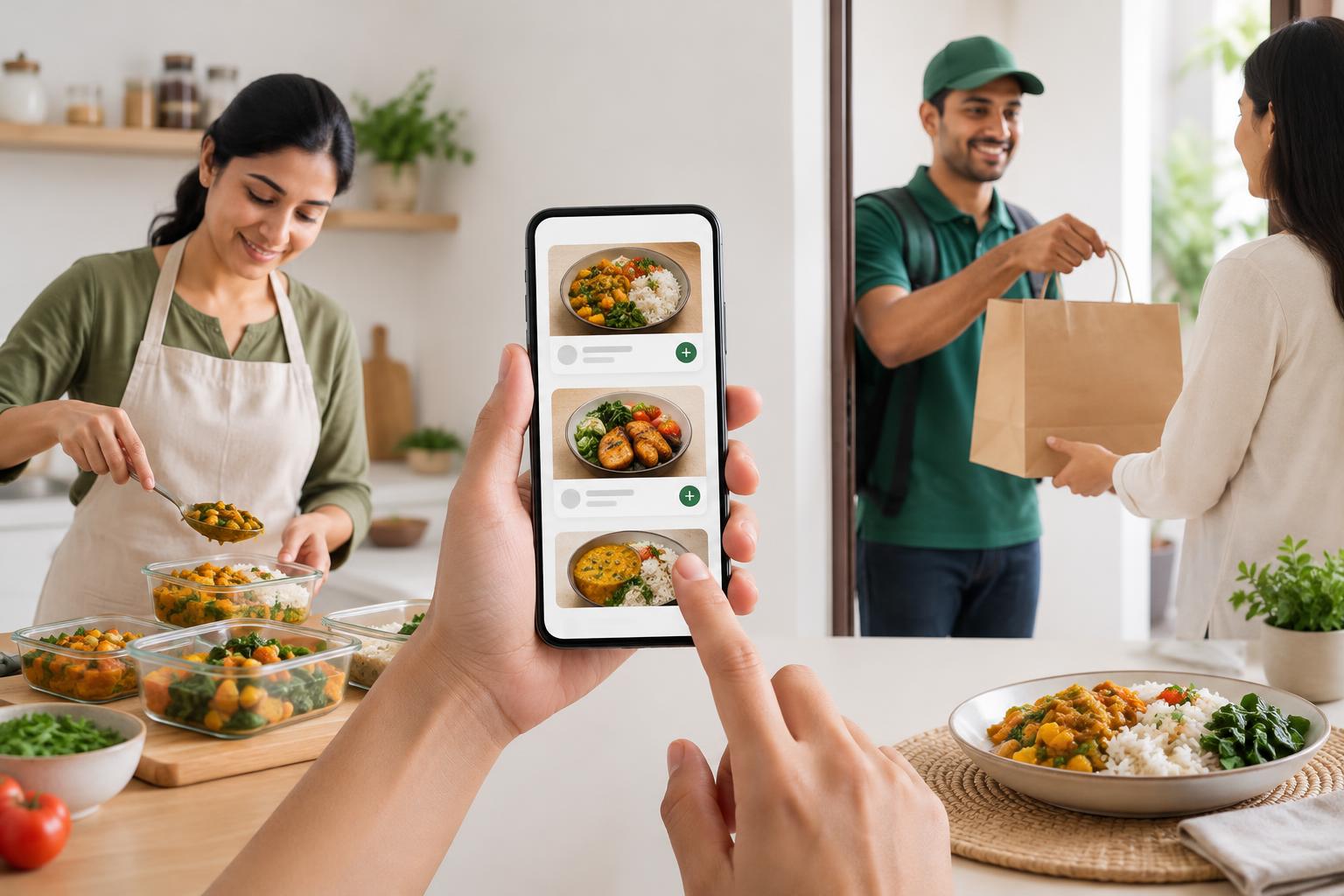
Home-cooked food is personal. A platform that sells it cannot be casual about operations. Customers are buying a meal they cannot inspect, cooked in a home kitchen, and delivered on a promise. The software has to make that promise visible, repeatable, and easy to keep.
Start with kitchen capacity
Most food platforms start with a catalogue and add operations later. That order is backwards. The product is not a list of dishes. It is a commitment that a specific meal will be cooked, packed, and handed over at a specific time.
Define supply before you design screens. Who cooks? Which dishes can they produce consistently? What are the preparation windows? Which items travel well? What food-safety and licensing rules apply in each market? A platform should expose these constraints to customers, not hide them behind an unlimited menu.
A curated menu is an advantage. Fewer dishes, clear portions, and tighter delivery windows protect quality. They also make it easier to train cooks and forecast demand.
Design the menu for repeatable production
Every dish needs a standard portion, ingredient list, allergen note, packaging method, preparation time, and holding time. If a cook cannot repeat it during a busy service, it is not ready for launch.
Group dishes by how they are produced, not only by cuisine. A stew that can be batch-cooked behaves differently from a fried item that must be served immediately. Use daily limits and availability windows. Mark sold-out items clearly. This prevents orders the kitchen cannot fulfil.
Set expectations with accurate descriptions and photography. Show the real portion. Name the sides. State allergens and spice levels. A customer who knows what is coming is less likely to complain and more likely to order again.
Make ordering simple and unambiguous
The ordering flow should answer five questions fast: What am I buying? When will it arrive? What does it cost? How is it delivered? What happens if something goes wrong?
Show pickup or delivery slots before checkout. Use clear cut-off times. Confirm the address and access notes. Keep payment options short and familiar. Send a confirmation that repeats the items, total, time window, and support channel.
Avoid feature clutter. A home-cooked food platform does not need to imitate every restaurant marketplace. It needs to make the next action obvious and the order status easy to understand.
Give the kitchen its own workflow
A list of orders is not a kitchen system. Cooks need preparation tickets grouped by dish and time slot, with allergy and packaging notes attached. They need simple states: accepted, preparing, ready, handed to driver. If those states do not update the customer view, staff will spend service time answering questions.
Batch work where quality allows. Stage packaging. Create one handoff station with labels, seal checks, and a final item count. Missing-item complaints often start at handoff, not in the kitchen.
Treat delivery as part of the product
Delivery is where the brand becomes physical. Define zones by travel time, not distance alone. Set order cut-offs that match kitchen capacity. Decide how drivers are assigned, how orders are grouped, and what proof is captured at handover.
Packaging must protect temperature, texture, and presentation. Use seals. Add a handover check. Give customers a simple way to report a problem. If an order is running late, tell them before they ask.
Dal Dom's Thaybah combines a home kitchen with customer ordering, preparation management, and driver delivery workflows. That is the right shape: one chain from menu to handover, not a set of disconnected tools.
Build the platform layer around roles
A useful platform has distinct views for customers, cooks, dispatch, and administrators. Each view should show only what is needed to complete the next task. Customers need status and support. Cooks need tickets and timing. Dispatch needs address, order size, and handover status. Administrators need exceptions: refunds, late orders, missing items, and blocked cooks.
Keep an audit trail of order changes. That record protects customers, cooks, and the business when a dispute arises. It also gives you evidence to improve the operation.
Build trust before you need it
Trust is an operating asset. It comes from consistent food, honest descriptions, visible food-safety practices, clear pricing, and fair complaint handling.
Publish who is cooking and how the kitchen is managed. Keep records of ingredients, preparation, and temperature checks where required. Set a refund or remake policy and explain it before checkout. Resolve complaints with action, not argument. Reviews should follow verified orders and be moderated consistently. Never invent social proof.
Food safety is not a back-office detail. Train cooks on hygiene, allergen control, cooling, and reheating. Check local requirements for home kitchens. Build the workflow around those rules instead of treating them as paperwork.
Model the economics before launch
A home-cooked order carries more costs than many founders expect: ingredients, packaging, cooking labour, delivery, payment fees, refunds, and support. Calculate contribution margin per order, not just the selling price.
A simple test: revenue minus ingredients, packaging, delivery cost, and payment fees. If that number is thin, more orders will not fix the business. Adjust the menu, minimum order, delivery fee, or service area.
Track order accuracy, preparation time, delivery time, cancellations, refund rate, repeat purchase rate, and contribution margin. Review them weekly. Expand only when the kitchen and delivery network can hold quality at current volume.
Pilot small, then earn the right to grow
Launch in one neighbourhood with a limited menu and a small number of time slots. Recruit cooks who can meet the standard. Test the handoff. Measure complaints. Fix the weakest step before adding kitchens or a wider map.
A home-cooked food platform earns trust one fulfilled order at a time. Dal Dom builds software for real operations, including Thaybah for home cooking and food ordering. If you are building a platform around a kitchen, a menu, and a delivery promise, let's talk.